Basement moisture is a common issue in many homes, often resulting from high humidity, water intrusion, or poor ventilation. When damp conditions persist, they create an environment where mold, bacteria, and other microorganisms can grow, releasing spores, fragments, and chemical compounds into the indoor air.
This article summarizes findings from peer-reviewed research on how exposure to damp indoor environments and mold precursors may affect health. We focus on established evidence, avoid alarmist language, and highlight when professional assessment or remediation is warranted.
- Persistent basement moisture enables mold and bacterial growth that releases allergens, irritants, and inflammatory particles into indoor air.
- Strong evidence links damp indoor environments to increased risk of asthma development, allergic sensitization, and respiratory symptoms, especially in children.
- Musty odor is associated with damp construction but does not by itself confirm active mold growth, and health complaints are attributed more to the underlying dampness and mold than to the odor chemicals alone, so a persistent musty smell is still a reason to look for hidden moisture.
- No universal safe exposure level has been established; individual susceptibility varies widely.
- Professional assessment is recommended when moisture problems are extensive, hidden, or when occupants have persistent respiratory or immune-related symptoms.
How Basement Moisture Creates Conditions for Mold and Microbial Growth
Persistent moisture in basements — whether from condensation, leaks, or elevated relative humidity — provides the water activity that fungi and bacteria need to proliferate. Building materials such as wood, drywall, insulation, and carpeting become reservoirs for microbial growth when they remain damp for more than 48–72 hours [1].
As these microorganisms grow, they release spores, hyphal fragments, and volatile organic compounds (VOCs) into the air. Studies have characterized these particles and shown they can carry allergens, irritants, and pro-inflammatory substances that become airborne and distribute throughout the home via natural airflow or HVAC systems [2].
The mixture of viable and non-viable fungal particles, bacterial components, and microbial VOCs creates a complex exposure profile that is not captured by simple spore counts alone [3].
Respiratory and Allergic Health Effects Linked to Damp Indoor Environments
Epidemiological and clinical research consistently associates indoor dampness and mold exposure with increased risk of respiratory symptoms, asthma development and exacerbation, allergic rhinitis, and hypersensitivity pneumonitis [4]. A 2013 review of children’s health found that indoor water damage and dampness were linked to cough, wheeze, and asthma diagnosis, with stronger effects in younger children [5].
The 2023 AWMF mold guideline for medical clinical diagnostics emphasizes that a diagnosis of mold-related health effects requires a combination of exposure history, compatible symptoms, and objective findings such as specific IgE sensitization or inflammatory markers, rather than symptom report alone [6].

Research also indicates that the characteristic musty odor, explained by chloroanisoles that form when microbes transform chlorophenols from legacy wood preservatives, is associated with damp building constructions but does not by itself show active mold growth, and that reported health complaints in populations are more strongly attributed to the underlying dampness and mold than to the odor compounds themselves [7].
Inflammatory and Immune System Responses to Indoor Mold Particles
Laboratory studies demonstrate that indoor mold particles can trigger pro-inflammatory responses in human airway cells, including the release of cytokines such as IL-6, IL-8, and TNF-α, suggesting a mechanistic pathway for the respiratory irritation and inflammation observed in exposed occupants [2].
A pilot study investigating toxic indoor air environments reported associations between exposure to damp, mold-contaminated spaces and markers of immune suppression and increased morbidity, though the authors note the need for larger, controlled studies to confirm causality [8].
Vulnerable Populations: Children, Elderly, and Those with Pre-existing Conditions
Children are particularly susceptible to the effects of damp indoor environments due to their developing respiratory and immune systems, higher breathing rates relative to body size, and more time spent indoors. The 2013 review highlighted that early-life exposure to indoor dampness and mold is associated with increased risk of asthma onset and persistent respiratory symptoms [5].
Individuals with pre-existing asthma, allergies, or compromised immune systems may experience more severe or frequent reactions to mold allergens and irritants. Clinical guidelines recommend that these individuals receive priority for exposure assessment and remediation when dampness is identified [4][6].
What the Evidence Does Not Say: Gaps and Limitations
While the link between indoor dampness, mold growth, and adverse respiratory outcomes is well-established, research has not defined precise exposure thresholds (e.g., spore counts or VOC concentrations) that guarantee health effects for all individuals. Susceptibility varies widely based on genetics, age, immune status, and co-exposures. The two timescales those effects run on are separated in short-term vs. long-term health effects of basement moisture.
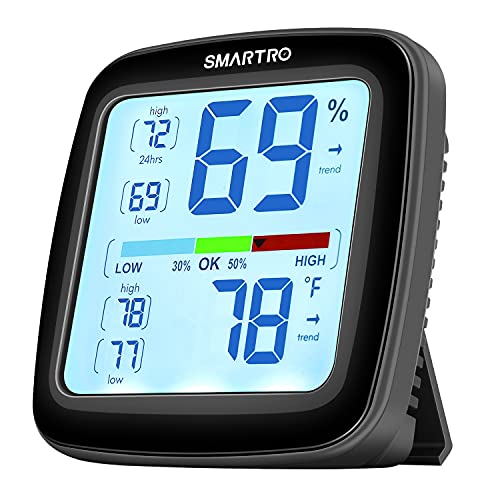
Studies also cannot attribute every nonspecific symptom (such as fatigue, headache, or cognitive complaints) solely to mold exposure, as these symptoms overlap with many other environmental and physiological factors. The AWMF guideline cautions against over-attribution without objective clinical correlation [6].
FAQ
Can basement moisture cause asthma?
Research shows that indoor dampness and mold exposure are associated with increased risk of asthma development and exacerbation, particularly in children [5][4].
Is the musty smell in my basement toxic?
The musty odor is explained by chloroanisoles, which form when microbes transform chlorophenols from legacy wood preservatives. Health complaints in populations are attributed more to the underlying dampness and mold than to the odor compounds themselves. The smell does not by itself confirm active mold growth, but it is associated with damp construction, so treat it as a cue to look for hidden moisture and mold, which can release allergens and inflammatory particles [7].
How do I know if my symptoms are from mold exposure?
A medical evaluation that includes exposure history, symptom pattern, and objective testing (e.g., specific IgE, spirometry) is needed. Self-diagnosis based on symptoms alone is unreliable because many conditions mimic mold-related illness [6].
When should I hire a professional for basement moisture?
Call a licensed mold assessor or indoor environmental professional if you see visible mold over 10 square feet, suspect hidden moisture behind walls, have had flooding, or if household members have persistent respiratory or immune symptoms that improve away from home.
This article summarizes research findings and does not provide medical advice. If you or a household member experience persistent respiratory, allergic, or immune-related symptoms, consult a healthcare provider. For moisture or mold problems beyond minor surface cleaning, engage a licensed mold assessor or remediation contractor to evaluate and address the source safely.
References
- Indoor fungi: companions and contaminants. Indoor air, 2015
- Characterization and pro-inflammatory potential of indoor mold particles. Indoor air, 2020
- Indoor fungal exposure. Immunology and allergy clinics of North America, 2003
- Exposure and Health Effects of Fungi on Humans. The journal of allergy and clinical immunology. In practice, 2016
- Indoor water and dampness and the health effects on children: a review. Current allergy and asthma reports, 2013
- AWMF mold guideline “Medical clinical diagnostics for indoor mold exposure” – Update 2023 AWMF Register No. 161/001. Allergologie select, 2024
- Chloroanisoles and Chlorophenols Explain Mold Odor but Their Impact on the Swedish Population Is Attributed to Dampness and Mold. International journal of environmental research and public health, 2020
- Toxic Indoor Air Is a Potential Risk of Causing Immuno Suppression and Morbidity-A Pilot Study. Journal of fungi (Basel, Switzerland), 2022
These statements have not been evaluated by the Food and Drug Administration. This information is not intended to diagnose, treat, cure, or prevent any disease. Content is for informational purposes only and is not medical advice; consult a qualified healthcare provider before starting any supplement. As an Amazon Associate we earn from qualifying purchases.
