Basement moisture’s health relevance operates on two timescales: immediate irritation and longer-term effects from resulting mold growth.
Separating these two timescales is not an academic exercise. It changes what you do, because the short-term effects are the ones you will notice and the long-term ones are the ones that justify acting on what you noticed.
It also explains a pattern many households recognize: the basement is unpleasant, nobody feels ill exactly, and so nothing gets done for years. The sections below cover what dampness itself contributes, what develops when moisture persists, and why the gap between the two is the argument for treating a musty basement as a maintenance item rather than a nuisance.
- Immediate discomfort and allergy-like symptoms can occur even before visible mold develops.
- Long-term respiratory health effects are associated with persistent mold growth resulting from unaddressed moisture.
- Addressing moisture proactively prevents the conditions that lead to mold, rather than treating mold after the fact.
- This two-timescale understanding supports prioritizing prevention over reactive mold treatment.
Short-Term Irritation Effects
Musty odors and general dampness can cause immediate discomfort, and some people report allergy-like symptoms (sneezing, congestion) in damp basement environments even before visible mold develops [1].
The musty smell is itself information. That odor comes from compounds released by microbial growth as it metabolizes damp material, which means a basement can smell musty before anything is visible, and the smell is often the earliest available indicator that growth has started somewhere out of sight.
The symptoms people report in damp spaces, which commonly include nasal congestion, sneezing, eye and throat irritation, and sometimes coughing, tend to have a distinguishing pattern worth noticing: they appear in the space and ease after leaving it. Responses also vary widely between individuals in the same household, which is normal for this kind of exposure and is not a reason to dismiss what one person is experiencing. Dust mites are a second factor, since they favor humid conditions, which is one reason humidity control can help even where mold is not visibly present.
Long-Term Effects Through Mold Growth
Persistent moisture supporting mold growth is associated with documented respiratory health effects over time, making moisture control an important preventive measure against this longer-term concern.
The mechanism is straightforward. Mold is opportunistic and needs moisture, a food source, and time. Basements supply the food source readily in the form of paper-faced drywall, wood framing, carpet, and stored cardboard, so moisture is usually the only limiting factor. Once conditions are favorable, growth begins within a matter of days rather than months, which is why prompt drying after any water event matters so much more than it intuitively seems to.
Public health bodies have found consistent associations between damp indoor environments and respiratory effects over time, including upper respiratory symptoms, cough, wheeze, and asthma symptoms in people who already have asthma. Two points are worth stating carefully. The evidence associates dampness itself with these effects, not just visible mold, which is why moisture control rather than mold identification is the recommended intervention. And this is population-level evidence about environments, not a diagnostic statement about any individual, so health questions belong with a physician who knows your history.

Why This Distinction Matters
Understanding both timescales underscores why addressing moisture proactively (before mold develops) is more effective than waiting to address symptoms after mold growth is already established.
The practical asymmetry is that short-term effects are reversible and long-term ones are the reason to act. Fix the moisture and the smell and the irritation generally resolve. The long-term concern is what accumulates while you decide, and it accumulates quietly, which is precisely the pattern that makes deferral feel reasonable at every individual moment.
Cost follows the same asymmetry. A moisture problem addressed while it is only a humidity problem is a dehumidifier and some exterior drainage work. The same problem addressed after growth has established in finished walls adds remediation, demolition, and restoration. The building consequence and the health consequence therefore point at the same conclusion for the same reason, which is that the intervention is worth far more early than late.
Who Is Most Affected, and When to Involve a Doctor
Sensitivity varies substantially, and some groups are more affected than others. People with asthma or existing allergies, people with compromised immune systems, and those with chronic respiratory conditions generally respond more strongly to damp environments. Age matters at both ends. Households that include anyone in these groups have a stronger case for treating basement dampness as a priority rather than a project for next year.
Exposure also depends on use, and it is easy to underestimate. A basement used as a bedroom, a home office, a gym, or a play area produces far more exposure than a basement visited to do laundry. Air movement between floors matters too, since a basement is not a sealed compartment and air from it commonly moves upward into living space, particularly where the mechanical system draws return air from below grade.
The signal for involving a physician is pattern rather than severity. Symptoms that consistently improve away from home and return on entering the basement, a household member whose asthma is harder to control since moving or since a water event, or persistent respiratory symptoms without an obvious cause are all worth raising with a doctor, and worth mentioning the damp environment specifically, since it is context they cannot infer. This article is general information about a building condition and is not medical advice.
FAQ
Can basement dampness bother me even without visible mold?
Yes — some people report allergy-like symptoms or general discomfort in damp environments even before visible mold growth develops, making proactive moisture control valuable regardless.
How quickly does mold grow after a basement gets wet?Faster than most people plan for. Given a food source and warmth, growth can begin within roughly a day or two of materials staying wet, which is why restoration practice emphasizes drying quickly rather than thoroughly cleaning later. Practically, this means the response to a water event is measured in hours: remove standing water, get air moving, run dehumidification, and pull up or open anything that traps moisture against a surface, such as carpet and pad. A basement that dries within a couple of days often has no mold consequence at all, while the same basement left damp for a week frequently does.
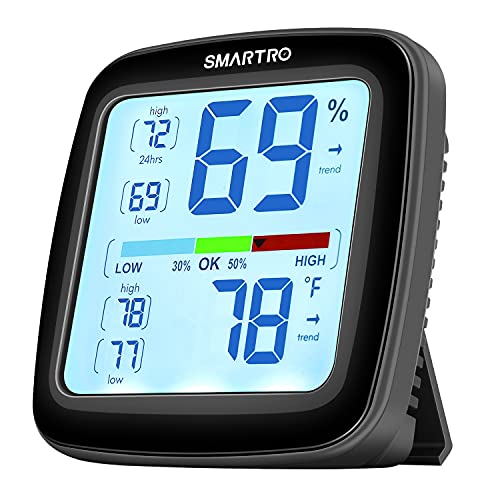
If I cannot smell anything, is the basement fine?Not necessarily, though the absence of odor is a reasonably good sign. Smell depends on where growth is relative to airflow, so growth inside a wall cavity or beneath flooring may not produce a noticeable odor in the open room. People also adapt to persistent odors in their own home and stop registering them, which is why a visitor’s reaction is often more reliable than your own. The more dependable indicators are measurements and evidence: humidity readings logged across seasons, moisture meter readings on framing, and visible signs such as efflorescence, staining, or damaged material at the base of walls.
Address moisture proactively rather than waiting for visible mold or worsening symptoms to develop.
References
- WHO guidelines for indoor air quality: dampness and mould. World Health Organization
These statements have not been evaluated by the Food and Drug Administration. This information is not intended to diagnose, treat, cure, or prevent any disease. Content is for informational purposes only and is not medical advice; consult a qualified healthcare provider before starting any supplement. As an Amazon Associate we earn from qualifying purchases.
