Homeowners insurance coverage for basement moisture costs depends heavily on the specific cause, with important exclusions to understand.
The most useful thing to understand about homeowners insurance and basement moisture is that the policy is not asking whether your basement got wet. It is asking which of several separate products, if any, was supposed to cover that specific cause. Standard homeowners coverage, a water backup endorsement, and flood insurance are three different things sold separately, and basement water sits at the seam between them.
Read this way, most of the confusion resolves. The sections below cover what the base policy deliberately leaves out, why the largest gap exists at all, and which specific add-on closes the gap that actually affects most basements.
- Proactive waterproofing and dehumidifier costs are standard maintenance, not typically insurance-covered.
- Groundwater seepage and flooding are typically EXCLUDED from standard policies, requiring separate flood insurance.
- Sudden, accidental damage from a covered peril may be covered depending on circumstances.
- Don’t expect insurance to cover routine prevention costs or groundwater-related damage — budget for these directly.
What’s Typically Not Covered
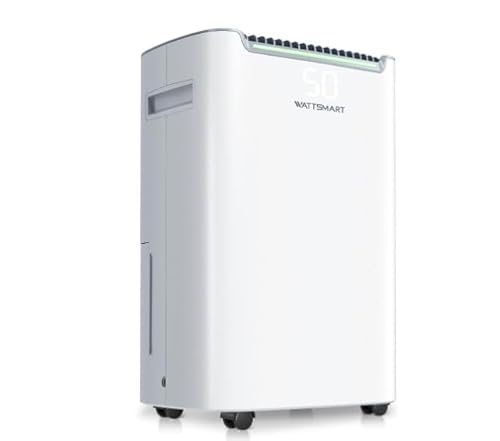
Proactive waterproofing and routine dehumidifier costs are standard maintenance items, not typically covered by homeowners insurance.
The governing principle is that insurance covers sudden, accidental, fortuitous events, not maintenance and not gradual deterioration. Waterproofing a foundation, running a dehumidifier, extending downspouts, and regrading are all improvements to the property. They prevent loss rather than repair it, which places them outside what any homeowners policy is designed to pay for.
The same principle explains why long-running seepage is usually excluded even when the resulting damage is severe. Once a condition has existed long enough to be reasonably discoverable, insurers generally treat addressing it as the homeowner’s responsibility. Mold is typically handled under this logic as well, often through a specific limitation or a capped sublimit rather than a flat exclusion, with coverage more likely when the mold followed a covered event and less likely when it followed chronic dampness.
Groundwater and Flood Exclusions
Groundwater seepage and flooding are typically excluded from standard homeowners policies, requiring separate flood insurance — this is the most important, commonly misunderstood coverage gap [1].
Flood coverage sits outside homeowners insurance entirely, available through the National Flood Insurance Program and through private carriers. The separation is structural rather than incidental, which is why no amount of additional homeowners coverage closes it. Two details matter when buying: NFIP policies generally carry a waiting period of about thirty days before taking effect, so it cannot be purchased once a storm is forecast, and basement coverage under a flood policy is narrower than most buyers expect, typically covering structural elements and certain mechanical systems while excluding finished walls, flooring, and most contents in a below-grade space.
That last point is worth sitting with if you have a finished basement. A homeowner can hold flood insurance, suffer an unambiguous flood, and still find that the finished portion of the basement is largely outside what the policy pays. Knowing this before finishing a below-grade space is considerably more useful than learning it afterward.
What May Be Covered
Sudden, accidental water damage from a covered peril (burst pipe) may be covered, depending on specific circumstances and policy language.
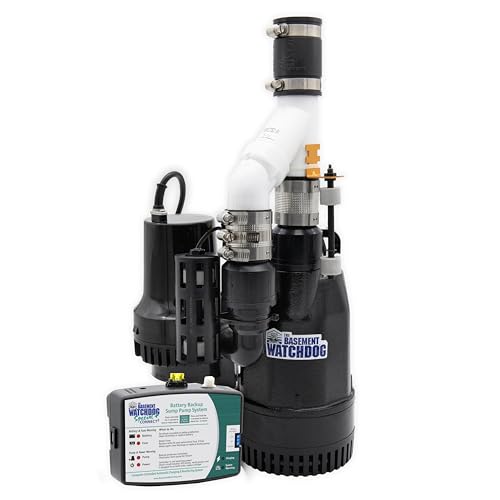
The endorsement worth knowing by name is water backup and sump pump overflow coverage. It is an optional add-on, generally inexpensive relative to other coverages, and it addresses the two failure modes that account for a large share of ordinary basement water: a sewer or drain backing up, and a sump pump that fails or is overwhelmed. Neither is covered by the base policy, and neither is a flood in the insurance sense, so without this endorsement they fall into the gap between products.
Sublimits are the detail to check rather than the existence of the endorsement. Water backup coverage is commonly sold at a stated limit that is far below the dwelling limit, and that limit is what caps a finished-basement loss. It is also worth confirming whether the coverage responds to a pump that failed mechanically, a pump defeated by a power outage, and a pump simply overwhelmed by volume, since those are three different scenarios and policies do not treat them identically.
Reading Your Own Policy for These Answers
Start with the declarations page rather than the policy booklet. It lists coverages, limits, deductibles, and every endorsement attached to your policy by form number, which makes it the fastest way to answer whether you actually have water backup coverage and at what limit. If no endorsement is listed, the answer is no, regardless of what you remember discussing when the policy was written.
Then read the exclusions section of the policy itself, which is where the water language lives, and note that some policies apply a separate, higher deductible to specific perils. A separate wind or water deductible expressed as a percentage of the dwelling limit rather than a flat amount can be substantially larger than the standard deductible, and that difference changes whether a mid-sized loss is worth claiming at all.
Bring specific scenarios to your agent rather than general questions. Asking whether basement water is covered invites a general answer. Asking what happens if the sump pump fails during a power outage, if the municipal sewer backs up, and if groundwater comes through the slab during a wet spring produces three concrete answers, each of which maps to a different product. That conversation is also the natural moment to price the water backup endorsement, since the gap it fills is the one that catches the most homeowners.
FAQ
Will my insurance pay for basement waterproofing?
No — this is a routine preventive improvement, not covered by homeowners insurance. And if you experience actual flooding, standard policies typically exclude groundwater/flood damage entirely.
Is water backup coverage the same as flood insurance?No, and they cover opposite situations. Water backup and sump pump overflow coverage is an endorsement on your homeowners policy that responds when water comes back up through drains or when a sump pump fails or is overwhelmed. Flood insurance is a separate policy that responds when surface water or groundwater from outside inundates the property. Holding one does not provide the other. A homeowner in an area with meaningful flood exposure and a finished basement may reasonably want both, while a homeowner well outside a flood-prone area often gets far more practical value from the backup endorsement alone.
If insurance will not pay for waterproofing, why do it?Because the economics run through prevention rather than reimbursement. The cost of a drainage system or exterior work is knowable and one-time, while an uncovered water loss in a finished basement is neither. Preventive work also protects the coverage you do have, since a documented history of unaddressed moisture can weaken a future claim and, in some cases, affect insurability. It is worth asking your carrier whether documented mitigation affects your premium or your eligibility for the backup endorsement, because some carriers do consider it.
Verify whether your specific situation involves a covered peril versus excluded groundwater/flooding before assuming coverage.
References
- Floodsmart | The National Flood Insurance Program. FEMA National Flood Insurance Program
These statements have not been evaluated by the Food and Drug Administration. This information is not intended to diagnose, treat, cure, or prevent any disease. Content is for informational purposes only and is not medical advice; consult a qualified healthcare provider before starting any supplement. As an Amazon Associate we earn from qualifying purchases.