First-time homeowners can start with a few practical steps to understand and manage their specific basement moisture situation.
A new house comes with a long list of things to worry about, and the basement rarely makes the top of it until something is visibly wrong. The advantage of starting early is that you get a baseline: you learn what normal looks like in your specific basement before anything changes, which is what makes a change detectable at all.
None of the first steps below are expensive, and none require deciding whether you have a problem. They are how you find out.
- An inexpensive hygrometer provides practical ongoing humidity monitoring.
- Check exterior grading and gutters, common overlooked contributing factors to basement moisture.
- Watch for musty odors, staining, or efflorescence as warning signs warranting further investigation.
- These three steps form a practical, low-cost starting approach for new homeowners.
Start With a Hygrometer
An inexpensive hygrometer placed in your basement gives you ongoing humidity monitoring, a practical, low-cost first step for understanding your specific situation [1].
Put one in the basement and leave it there. The value is in the record rather than the reading, because basement humidity swings seasonally and a number taken on one afternoon in October tells you almost nothing about August.
If yours tracks a high and low, check those rather than the current display. The peak is what determines whether stored belongings go musty and whether mold has conditions to grow [2], and the peak often occurs when nobody is down there to see it.
Write down a reading roughly monthly for the first year, in a note on your phone or on paper taped to the wall. That first year becomes the baseline against which everything later is compared, and it takes about ten seconds a month to build.
Check Exterior Grading and Gutters
Confirm your home’s exterior grading slopes away from the foundation and gutters direct water away from the house [1] — these simple, often-overlooked factors are common contributing causes.
This is the highest-return thing a new homeowner can do about basement moisture, and it usually costs nothing but an afternoon. Walk the full perimeter of the house and look at whether the ground slopes away from the foundation or toward it. Soil settles over years, and a house that was graded correctly when built often is not now.
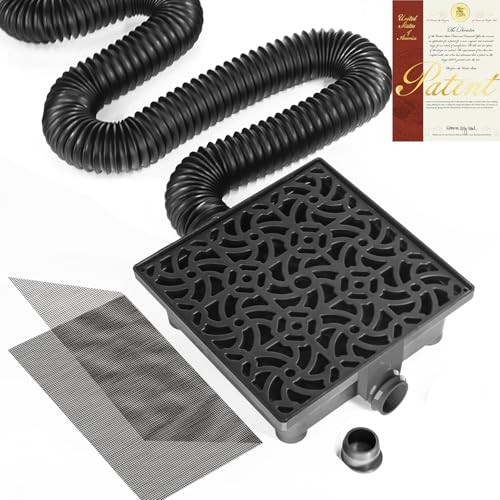
Follow every downspout to where it actually discharges. Downspouts emptying at the base of the foundation put roof water directly against the wall, and extending them so they discharge well away from the house is inexpensive and immediately effective.
Look for the specific problems that concentrate water: gutters clogged enough to overflow at a corner, a patio or driveway that has settled and now drains back toward the house, and planting beds built up against the siding. Each of these delivers water to exactly the place you least want it.
Do one walk during heavy rain if you can. Ten minutes outside with an umbrella while it is actually raining shows you where water goes in a way no dry-day inspection does.
Watch for Warning Signs
Watch for musty odors, visible staining, or efflorescence as warning signs warranting further investigation or professional assessment.
A musty smell is the earliest signal and the easiest to normalize into background. If the basement smells different from the rest of the house, something is staying damp, and it is worth finding out what before it becomes visible.
Efflorescence, the chalky white deposit on foundation walls, means water has passed through the masonry and evaporated, leaving minerals behind. It looks minor and it is genuinely informative: it is evidence of water movement through the wall rather than of humid air.
Also watch for staining near the wall and floor joint, rust at the base of metal posts or appliances, and finished-wall paint that bubbles or peels near the floor. In a finished basement these secondary signs matter more, because the foundation itself is hidden behind the finish.

Learn Your House Before You Need To
Find the main water shutoff and label it now, while nothing is wrong. In an active leak the difference between knowing where it is and searching for it is measured in gallons, and it is the single most useful thing to know about a house you just bought.
If there is a sump pump, test it before the first heavy season rather than discovering its condition during one. Pouring a bucket of water into the pit should start it and it should shut off on its own. Check whether it has battery backup, and if it does, check the battery’s age, since the outage and the flood tend to arrive together.
Dig out the inspection report from your purchase and read the basement section again now that you live there. Items that read as generic boilerplate before closing are considerably more meaningful once you know which corner smells damp in July.
Ask the previous owner or the neighbors if you can. Neighbors on the same street share the same water table, the same soil and often the same builder, and they will tell you plainly whether basements on that block take water.
FAQ
What’s the single easiest first step for a new homeowner?
An inexpensive hygrometer for ongoing humidity monitoring, combined with a quick check of your exterior grading and gutters, covers the most practical, low-cost starting points.
My basement smells musty but I cannot see any water. Is that a problem?
It is worth investigating. Smell means something is staying damp long enough to support growth, and in a finished basement the source is frequently behind a wall or under flooring where it is not visible. Start with a hygrometer to establish whether it is general humidity or a localized source.
Is a dehumidifier enough on its own?
It is enough for humid air, which is a common and legitimate basement condition. It is not enough for water entering through the wall or floor, because it treats the result rather than the cause. Establish which one you have before spending on either.
How soon should I worry about a small damp patch?
Track it rather than panicking or ignoring it. Note the date, photograph it, and see whether it correlates with rainfall and whether it grows. A patch that appears after heavy rain and dries out is a different situation from one that is always there, and the pattern is what a contractor will ask about first.
This is a starting framework — pursue professional assessment if you notice any warning signs like staining, odors, or visible water intrusion.
References
- A Brief Guide to Mold, Moisture, and Your Home. US Environmental Protection Agency
- Ten Things You Should Know About Mold. US Environmental Protection Agency
These statements have not been evaluated by the Food and Drug Administration. This information is not intended to diagnose, treat, cure, or prevent any disease. Content is for informational purposes only and is not medical advice; consult a qualified healthcare provider before starting any supplement. As an Amazon Associate we earn from qualifying purchases.