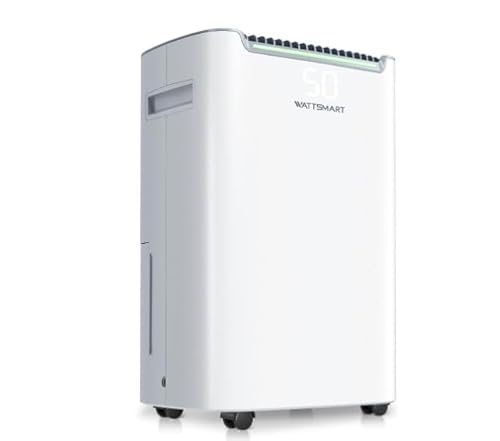
Basement size directly affects dehumidifier capacity needs and, for larger waterproofing projects, overall remediation costs.
- Small basements may need just a standard-capacity dehumidifier costing $150-$250.
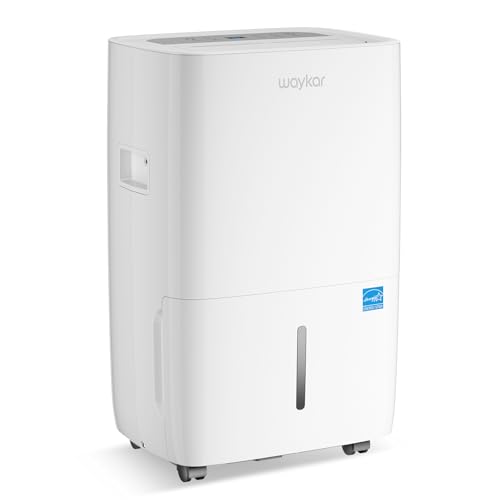
- Larger basements need higher-capacity or multiple dehumidifier units.
- Waterproofing cost scales directly with foundation perimeter for larger projects.
- Budget dehumidifier capacity and waterproofing scope based on your specific basement’s actual square footage and perimeter.
Small Basements
A small basement (under 1,000 sq ft) may need just a standard-capacity dehumidifier, keeping equipment cost in the $150-$250 range.
Larger Basements
A larger basement (1,500+ sq ft) needs a higher-capacity dehumidifier or multiple units, and if waterproofing is needed, cost scales with foundation perimeter length.
Waterproofing Cost Scaling
Exterior waterproofing cost scales directly with foundation perimeter, since this determines the excavation length required — a larger home’s basement waterproofing project costs proportionally more.
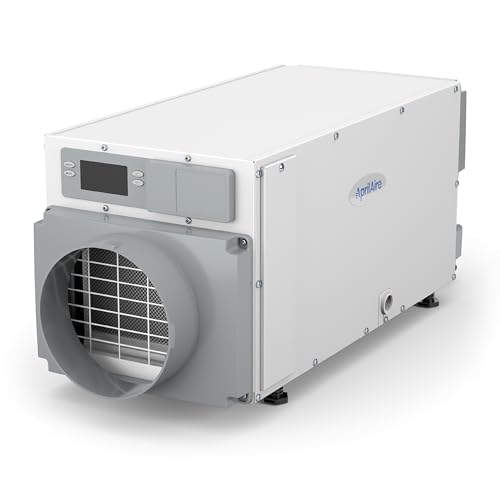
Square footage is the number most people reach for first, but it is only half of what drives the equipment side of the budget. Ceiling height matters because a dehumidifier is conditioning a volume of air rather than a floor area, so a basement with high ceilings behaves like a larger space than its footprint suggests. Open stairwells matter for the same reason, since they let conditioned basement air escape upward and pull warmer, wetter air back down.
Layout matters as much as raw size. A single open basement can often be handled by one correctly sized unit placed centrally, because the air is free to circulate back to the intake. The same square footage divided into several closed rooms behaves like several small basements, and one unit sitting in the largest of them will leave the others damp no matter how generously it is rated. Where doors stay shut, plan for either a second unit or a way to keep air moving between rooms.
The other size-driven cost that homeowners tend to miss is drainage rather than dehumidification. A larger roof sheds proportionally more water, and that water arrives at the foundation through the gutters. Two houses with identical basements can present very different problems if one has twice the roof area feeding the same number of downspouts. Before sizing anything, it is worth counting downspouts against roof area and confirming each one discharges well away from the wall.
Size also changes what a failure costs rather than only what a fix costs. A larger finished basement holds more flooring, more drywall and usually more stored belongings, so the same volume of water does proportionally more damage before anyone notices. That is the argument for treating monitoring as a size-scaled expense too, since a bigger space generally needs more than one sensor to catch a problem early wherever it starts.
When comparing quotes across a larger project, ask each contractor to state the assumptions behind their scope rather than only the total. Two bids for the same basement can differ substantially because one has priced the full foundation perimeter and the other has priced only the wall where water was seen. Neither is automatically wrong, but they are not the same job, and the difference is much easier to discuss before work starts than afterwards. Which of those jobs applies depends partly on the building itself, as set out in how basement moisture management varies by home type.
FAQ
Does a bigger basement need a much bigger dehumidifier?
Yes — dehumidifier capacity should be matched to square footage, and larger basements may need a higher-capacity unit or multiple units for adequate coverage.
Does ceiling height change what dehumidifier I need?
It can. Capacity ratings are usually expressed in floor area, which quietly assumes an ordinary ceiling height. A basement with unusually high ceilings holds more air than its footprint suggests, so a unit rated for that square footage may run continuously without reaching the humidity you want. Treat the area rating as a starting point and verify with a hygrometer.
Should a divided basement use one large unit or several smaller ones?
It depends on airflow rather than total size. If interior doors normally stay open and air circulates freely, one correctly sized unit placed centrally is generally simpler to maintain. If rooms are closed off from one another, a single unit will condition the room it sits in and little else, so either add units or arrange for air to move between the spaces.
Confirm dehumidifier capacity and waterproofing project scope with your specific basement’s actual measurements rather than a general size assumption.
These statements have not been evaluated by the Food and Drug Administration. This information is not intended to diagnose, treat, cure, or prevent any disease. Content is for informational purposes only and is not medical advice; consult a qualified healthcare provider before starting any supplement. As an Amazon Associate we earn from qualifying purchases.