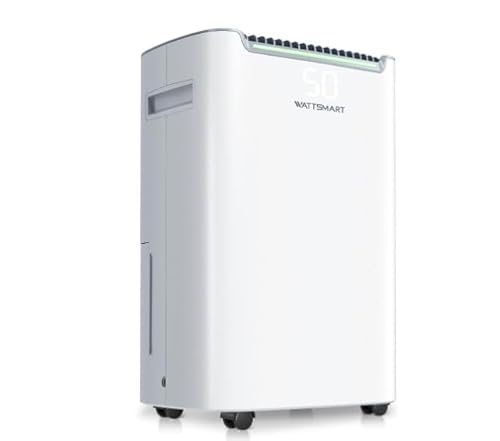
A few optional accessories can enhance your core basement moisture control setup.
Accessories are worth buying in a specific order, and the order follows failure consequence rather than price. Anything that tells you a system has stopped working, or that keeps it working when the power goes out, earns its place before anything that merely adds convenience.
- Water alarm sensors provide an additional alert layer near critical areas.
- Drain hose kits allow continuous dehumidifier drainage without manual reservoir emptying.
- Battery backup systems address the specific power-outage failure scenario for sump pumps.
- These accessories round out a more comprehensive, convenient moisture control setup.
Water Alarm Sensors
Standalone water alarm sensors placed near your sump pump or in low-lying areas provide an additional alert layer beyond smart-connected systems, useful even for basic setups.
A basic water alarm is a battery, a buzzer, and two contacts that close when they get wet, and it typically costs less than fifteen dollars. Placed on the floor beside the sump pit, at the base of the water heater, and near the washing machine, it converts a slow overnight failure into something you find in minutes. That gap is the difference between a wet floor and replacing carpet, drywall, and whatever was stored down there.
Wi-Fi connected sensors extend the same idea to a house you are not in, which matters if you travel or if the basement is one you visit weekly rather than daily. They do add a dependency on your network and on the manufacturer keeping their service running, so it is reasonable to keep at least one dumb, battery-powered alarm alongside them as a fallback that cannot be switched off remotely.
Whichever type you use, test them on a schedule. Touch the contacts with a wet finger twice a year, replace batteries annually, and treat a sensor you have never tested as a sensor you do not have.
Dehumidifier Drain Hose Kits
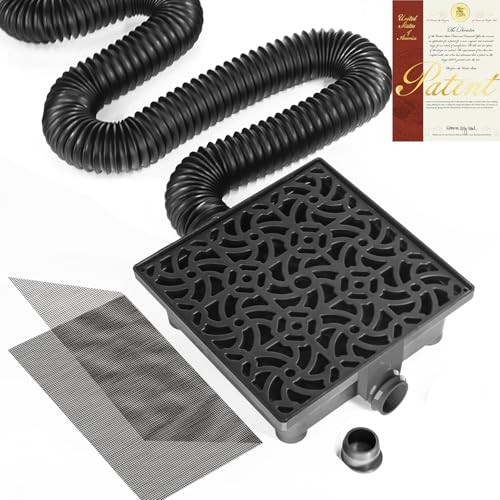
A drain hose kit allows continuous drainage to a nearby floor drain rather than manually emptying a collection reservoir, a convenient upgrade for ongoing operation.
Continuous drainage is the upgrade that changes how the machine behaves rather than how it feels to use. A unit emptying into a bucket stops when the bucket is full, which reliably happens during the wettest stretch of the year and often while nobody is home. Once it is plumbed to a drain it simply keeps running, which is the entire point of owning it.
Gravity drainage needs the outlet to sit above the drain, and it needs a hose with a continuous downward fall and no low spot where water can sit. Standard garden hose thread is common on the outlet, so a short length of hose and a hose clamp is usually the whole job. Where there is no floor drain lower than the machine, the alternatives are a model with an internal condensate pump or a small standalone condensate pump that lifts the water to a sink or a window.

Battery Backup for Sump Pumps
A battery backup system addresses the specific power-outage failure scenario, providing continued pump function during storms that also cause power loss.
The reason a backup is not really optional is timing. The storms that put the most water into the ground are the same storms that take the power down, so the mains pump is most likely to be unavailable at the exact hour it is most needed. A backup addresses that specific coincidence rather than a general worry about reliability.
DC backup systems run a second pump from a deep cycle battery and will typically move water for several hours of intermittent use, which covers most outages. Water-powered backups use municipal supply pressure and have no battery to maintain, but they consume potable water while running and are not an option on a well. Choose on which failure mode you actually face, and note that a backup on a well system with no mains power will not run without a generator anyway.
A backup also needs maintenance to remain real. Batteries lose capacity over three to five years, and a system that has sat untested since installation is closer to decoration than protection. Most controllers have a test function, and running it twice a year takes a minute.
Two Cheap Items That Outrank Most Accessories
A hygrometer is the least expensive thing in this category and the most useful. Without one you are guessing at whether the dehumidifier is achieving anything, and a guess cannot tell you that the machine has been iced up for a fortnight. Place it away from the dehumidifier itself so it reads the room rather than the outlet air, and aim to hold the space between 45 and 50 percent relative humidity[1].
The second is a sump pit lid. An open pit evaporates water directly into the basement, which puts the dehumidifier to work removing moisture that a fifteen dollar cover would have kept out of the air entirely. A sealed lid also keeps debris out of the pit, which is one of the more common causes of a fouled float switch.
FAQ
Is a drain hose kit worth adding to my dehumidifier?
Yes, for convenience — it allows continuous drainage without manually emptying the collection reservoir, particularly useful if you can’t check on it daily.
Where should water alarm sensors actually go?
On the floor next to the sump pit, at the base of the water heater, beside the washing machine, and at the lowest point of any finished area. Those are the places where water appears first, which is what buys you the response time.
Can I run the dehumidifier hose into the sump pit?
You can, and it works, but it means the pump cycles more often and the open pit surface returns some of that water to the air. A floor drain is the better target where one exists, and fitting a sealed pit lid mitigates the downside where it does not.
How long does a sump backup battery last?
Expect three to five years on a standard deep cycle battery, less if the basement runs hot. Note the install date on the case, test the system twice a year, and replace on age rather than waiting for a failure that will present itself during a storm.
A battery backup for your sump pump addresses a real, documented failure scenario given how often power outages coincide with high-water storm events.
References
- A Brief Guide to Mold, Moisture and Your Home. U.S. Environmental Protection Agency
These statements have not been evaluated by the Food and Drug Administration. This information is not intended to diagnose, treat, cure, or prevent any disease. Content is for informational purposes only and is not medical advice; consult a qualified healthcare provider before starting any supplement. As an Amazon Associate we earn from qualifying purchases.