Building a simple comparison across key criteria helps you make an informed equipment purchase decision.
The useful version of a comparison chart is not a feature grid copied off a retailer page. It is four or five columns that actually change which unit you should own, scored against your own basement rather than against an abstract ideal. Everything else is noise that makes the spreadsheet longer without making the decision clearer.
- For dehumidifiers, compare pint capacity, noise level, efficiency, and drain hose compatibility.
- For sump pumps, compare horsepower/capacity, battery backup availability, and warranty terms.
- Confirm capacity properly matches your needs before letting other features drive final choice.
- A simple structured comparison beats choosing based on price or brand alone.
Dehumidifier Comparison Criteria
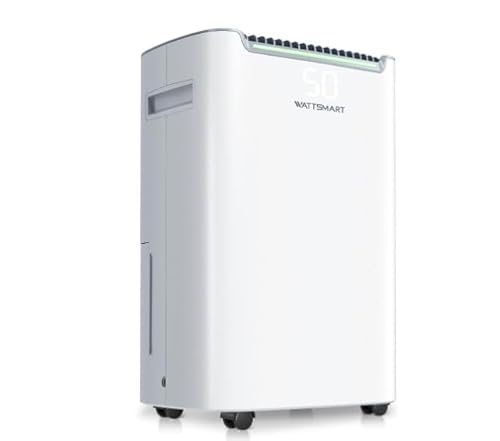
Compare pint capacity (matched to your basement’s square footage), noise level, energy efficiency (Energy Star rating), and drain hose compatibility across your shortlisted models.
Pint capacity is the column that decides the outcome, and it is also the one most often read wrong. Since the 2019 DOE test procedure change, the same physical machine is labelled with a lower pint number than it used to carry, because it is now rated at 65°F rather than 80°F [1]. A unit sold today as 50-pint is roughly the machine that was sold as 70-pint before the change. When you compare an older review against a current listing, you are frequently comparing two labels for the same hardware.
Noise deserves a real column if the basement is finished or sits under a bedroom. Published figures cluster between about 48 and 55 dBA, which sounds like a narrow band on paper but is the difference between background hum and something you notice through a floor. Where a manufacturer publishes no dBA figure at all, treat the omission as information rather than as a blank cell.
Efficiency and drainage belong together in your comparison because they both describe what the unit costs you over a season rather than at checkout. An Energy Star model running twelve to eighteen hours a day through a humid summer separates itself from a cheaper unit on the power bill alone [2].
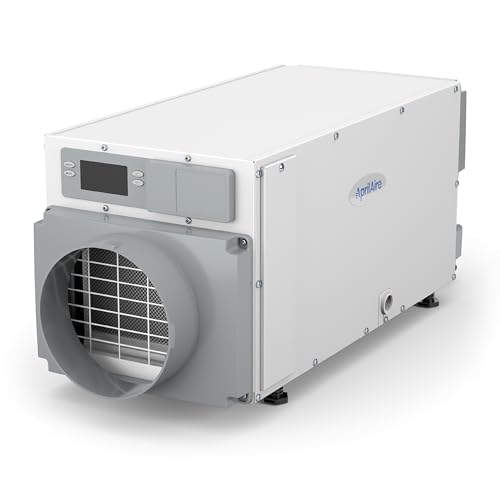
Drain hose compatibility decides whether the machine runs unattended or stops every time a reservoir fills, and a gravity drain only works if you have a floor drain lower than the outlet. Where you do not, you need a model with an internal condensate pump, which is a different column again.

Sump Pump Comparison Criteria
Compare horsepower/capacity, battery backup availability, and warranty terms across your shortlisted sump pump models.
Horsepower is the headline number and the least useful one on its own. What moves water out of the pit is gallons per hour at your actual vertical lift, and that figure falls sharply as lift increases. A pump rated at 3,000 GPH at a five foot lift may deliver closer to 2,000 GPH at ten feet. Measure the height from the pit to the discharge point before you compare anything, because the same two pumps can swap places once real lift is applied.
Switch type is the column that predicts failure. Vertical float switches tolerate narrow pits and tangle less than tethered floats, and solid state switches remove the moving part entirely at the cost of a sensor that can foul in silty water. Since the switch fails far more often than the motor does, comparing switch designs is closer to comparing reliability than comparing any spec on the motor plate.
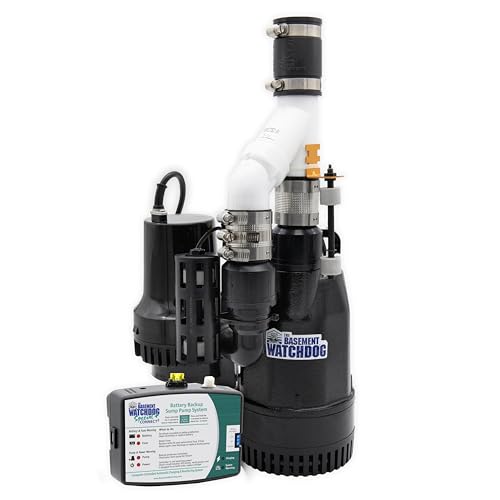
Then compare housing material and warranty as one pair, because they tend to describe the same tier. Cast iron bodies dissipate heat better than plastic and hold up through more cycles, and manufacturers who use them usually back them with three to five years rather than one. Battery backup availability belongs in the chart even if you do not buy it immediately, since retrofitting a backup onto a pit that was plumbed for a single discharge is more work than buying the pairing up front.
Making Your Final Choice
Once you’ve confirmed capacity properly matches your needs for either product, choose based on convenience features, efficiency, and price.
Score the chart against your own conditions rather than against the best available number in each column. A 70-pint unit in a small, moderately damp basement will short cycle and cost more to run without producing a drier room, and an oversized pump will cycle rapidly enough to shorten switch life. Correct sizing beats maximum sizing in both categories.
Where two candidates finish close, break the tie on serviceability rather than on features. Ask whether replacement filters and float switches are sold separately, whether the discharge fitting is a standard size, and whether the manufacturer publishes a parts diagram. A machine you can repair for thirty dollars in year four is worth more than one that is marginally quieter in year one.
Columns Worth Leaving Off the Chart
Some widely advertised features rarely change the decision. Wi-Fi connectivity on a dehumidifier is pleasant but does not remove more water, and it is a poor substitute for a ten dollar hygrometer placed where you actually care about the reading. Antimicrobial coatings on a bucket matter less if you drain continuously and never let water stand.
Coverage claims quoted in square feet are similarly weak as a comparison column, because they assume a moisture load the manufacturer never states. Two basements of identical footprint can differ by a factor of two in how much water they need removed per day, depending on drainage, slab condition, and whether the space is finished. Compare pint capacity and your measured relative humidity instead, and treat the square footage claim as marketing rather than as a specification.
FAQ
What’s the single most important thing to compare for either product?
Capacity (pint rating for dehumidifiers, horsepower/GPH for sump pumps) matched to your specific basement size and risk level is the most important baseline criterion.
Why does the same dehumidifier show two different pint ratings?
Because the federal test condition changed in 2019 from 80°F to 65°F. Ratings published after that change are lower for identical hardware, so a current 50-pint model is broadly equivalent to an older 70-pint one. Compare units tested under the same standard, not across the change.
How do I compare sump pumps if the listings only give horsepower?
Look for the manufacturer’s flow curve or the GPH figure quoted at a stated lift, usually ten feet. If a listing gives horsepower and nothing else, that is a gap in the data rather than a specification, and it is a reasonable reason to prefer a competitor who publishes the full curve.
How many models should the chart actually contain?
Three or four. Past that, additional rows mostly add options that differ in ways you will not notice, and the comparison starts consuming more time than the difference between the candidates is worth.
Never choose based on price alone without confirming capacity properly matches your basement’s specific size and risk level.
References
- Appendix X1 to Subpart B of Part 430 – Uniform Test Method for Measuring the Energy Consumption of Dehumidifiers. U.S. Code of Federal Regulations (10 CFR 430)
- Dehumidifiers | ENERGY STAR. U.S. EPA / U.S. DOE ENERGY STAR Program
These statements have not been evaluated by the Food and Drug Administration. This information is not intended to diagnose, treat, cure, or prevent any disease. Content is for informational purposes only and is not medical advice; consult a qualified healthcare provider before starting any supplement. As an Amazon Associate we earn from qualifying purchases.