Basement moisture prevention fits naturally into a broader home safety and maintenance framework rather than standing entirely alone.
Basement moisture is rarely worth managing as its own project. Almost every task on the list shares a location, a season, or a trigger with something else on the household maintenance calendar, and folding it in is what makes it happen consistently rather than in bursts after a scare.
- Include moisture monitoring in your household’s broader storm preparedness routine.
- Fold basement moisture management into a broader home air quality strategy.
- Include relevant checks in a broader annual home safety review covering multiple hazards.
- This integrated approach is more practical than treating basement moisture as an entirely separate system.
General Storm/Emergency Preparedness
Include basement moisture monitoring (sump pump function, gutter clearing) in your household’s broader storm preparedness routine, given the shared timing with severe weather events.
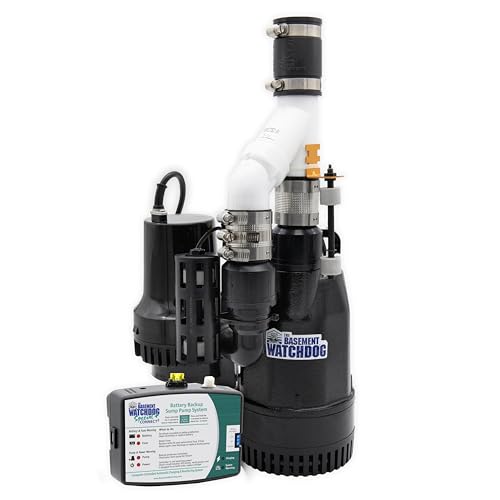
The overlap here is not incidental. The storms that saturate the ground are the storms that take the power down, which means the mains sump pump is most likely to be unavailable at the hour it is most needed. Any preparedness routine that already covers flashlights, batteries, and a phone charge should cover the pump as well, because it is the household system most directly exposed to the same event.
Before a forecast severe storm, three checks take about five minutes. Pour a bucket into the sump pit and confirm the pump starts and clears it. Confirm the discharge outlet outside is not blocked by leaves, soil, or ice. And test the battery backup by unplugging the primary pump rather than assuming a working primary implies a working backup.
It is also worth deciding in advance what you would do if the pump were out and water were rising, since that is a poor moment to start improvising. A utility pump and a length of hose in the basement, or a generator with a known-good extension lead, is a plan. Discovering that neither exists while the water is coming up is not.
Whole-Home Air Quality Planning
Fold basement moisture management into a broader home air quality strategy, given documented air circulation between basement and upper floors.
The stack effect means basement air does not stay in the basement. Warm air rises and leaves through the upper floors, and replacement air is drawn in from the lowest level, so a meaningful fraction of what you breathe upstairs entered through the basement. Estimates vary by construction, but the direction is consistent and it is why basement conditions belong in a whole-home air quality view rather than in a room-by-room one.
That gives basement humidity a role beyond the basement. Air conditioning, filtration, and ventilation choices upstairs are all working against whatever the lowest level is contributing, and a damp basement quietly raises the load on all of them. Holding the basement between 45 and 50 percent relative humidity is one of the more effective single actions available for the house as a whole.
The same path matters for anything else stored down there. Paints, solvents, fuel, and pesticides commonly live in a basement, and the same air movement that carries humidity upstairs carries their vapors, which is a reason to store them in sealed containers or, better, outside the conditioned envelope [1].

Annual Home Safety Review
Include gutter cleaning, grading checks, sump pump testing, and dehumidifier maintenance in a broader annual home safety review covering multiple hazards.
Most basement moisture items sit naturally alongside checks you already owe once a year. Smoke and carbon monoxide alarms, fire extinguisher pressure, water heater condition, dryer vent clearance, and electrical panel inspection are all annual, and most of them are in the same room as the sump pit.
Several genuinely interact. The water heater and washing machine are two of the most common indoor flood sources, so inspecting supply hoses while you are testing the pump covers related failures in one pass. A blocked dryer vent discharges warm humid air into the basement rather than outside, which is a moisture source people spend months trying to dehumidify away. And a furnace or water heater in a damp basement is corroding faster than one in a dry space, which is a maintenance cost as well as a safety item.
Where the Overlap Is Weakest
One thing does not fold in neatly, and it is worth separating rather than bundling: radon. Radon and moisture both come up through the slab and both are managed partly through sub-slab work, so they are frequently discussed together, but a dehumidifier does nothing whatsoever about radon and a radon system is not a moisture solution. If both are in play, they are two assessments and often two systems, and the sub-slab depressurisation work is what addresses the radon.
Sealing is the point where the two do touch usefully. Closing slab cracks and sealing the sump pit with a proper airtight lid reduces both vapor transmission and radon entry, and doing that work once with both in mind is more efficient than doing it twice. If you are having a radon system installed, it is a reasonable moment to ask about the moisture implications of the same penetrations. Folding both into one yearly pass is the approach described in including basement moisture prevention in your annual home safety audit.
FAQ
Should I check my sump pump as part of storm preparedness?
Yes — since sump pump failure risk is often highest during the same severe weather events that create flood risk, this is a natural, practical addition to storm preparedness checks.
Should sump pump testing really be part of storm prep?
Yes, and it is arguably the most useful item on the list. Pump failure and flood risk peak during the same weather event, so a five minute test ahead of a forecast storm addresses the failure at the point it is most likely to matter.
Does a damp basement really affect the upstairs air?
Yes. The stack effect draws replacement air in at the lowest level of the house and vents it through the top, so basement air moves upward continuously through normal operation. Basement humidity and odors are a whole-house condition rather than a contained one.
Can one system handle both radon and moisture?
Not in general. They share some sealing work and both involve the slab, but a radon mitigation system vents soil gas and does not dehumidify, and a dehumidifier does not reduce radon. Treat them as related but separate assessments.
Test your sump pump specifically before an expected significant storm, given the shared timing between storm events and pump failure risk.
References
- Volatile Organic Compounds' Impact on Indoor Air Quality. U.S. Environmental Protection Agency
These statements have not been evaluated by the Food and Drug Administration. This information is not intended to diagnose, treat, cure, or prevent any disease. Content is for informational purposes only and is not medical advice; consult a qualified healthcare provider before starting any supplement. As an Amazon Associate we earn from qualifying purchases.
